Adults with brain metastases (BM) have the most prevalent intracranial tumours. 20% to 40% of cancer patients acquire brain metastases (BM), for which a number of treatment options, including surgery and radiation, are available. Stereotactic radiosurgery (SRS) has been demonstrated as an effective treatment option for brain metastases (BM). Stereotactic radiosurgery (SRS) can be used in conjunction with or in place of previous surgical resection (Sx) or whole-brain radiation treatment (WBRT).
Stereotactic radiosurgery (SRS) is a high-precision technology that delivers a considerable dosage of radiation to a localised portion of an organ while minimising radiation to surrounding healthy tissue. Dr. Lars Leksell described conventional radiosurgery in the form of the Gamma Knife (Elekta, Stockholm, Sweden) in 1951. In order to target a specific region in the brain, this approach required the deployment of a hard head frame to immobilise the patient. Although this intrusive technique is highly accurate, it has a number of downsides for the patient, including discomfort and anxiety. Furthermore, the stiff head frame necessitates the presence of a neurosurgeon during frame installation.
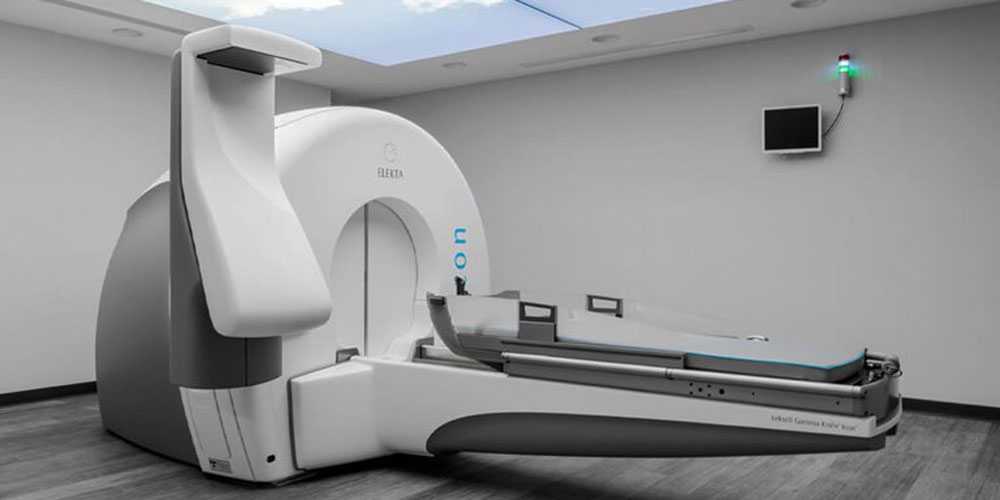
There are currently a number of frameless SRS systems available that use linear particle accelerator (LINAC) technology and do not require the implantation of a surgical hard frame while enabling improved conformance to odd-shaped lesions and sparing of eloquent areas.
A few days before the intervention, patients were immobilised using a frameless system and an individualised mask moulded with a thermoplastic pellet. To improve stiffness, a personalised intra-oral thermoplastic component was inserted. The time it took to make these masks ranged 30 to 45 minutes.
Following the mask moulding, a contrast computed tomography (CT) scan of the brain with a reconstructed slice thickness of 1 to 1.5 mm was conducted. The scans were then combined with gadolinium-enhanced magnetic resonance imaging (MRI) of the brain, which had previously been done. A radiation oncologist then contoured the lesion, and a margin of 1 to 3 mm was added to the gross tumour volume (GTV) to get the planned targeted volume (PTV). Before commencing dosimetry planning, a second radiation oncologist reviewed the contour of the target lesions and the organs at risk.
The system was Elekta Synergy-S®. An on-board cone-beam CT was used to confirm the patient's placement. For adjustments, a HexaPODTM (Elekta) table was also employed.
This enables repositioning along all axes, including rotations.
Patients might get either a single dose of radiation or a divided treatment. The planned targeted volume PTV was given a dosage ranging from 12 to 24 Gy, with a 15 Gy median. The ultimate radiation dosage was determined by the location and maximum diameter of the tumour. Furthermore, the volume of tissue receiving more than 10 Gy (V10) or 12 Gy (V12) was taken into account in the final radiation dose since it is an important predictor of radionecrosis (RN).
Our institution's treatment of brain metastases (BM) with linear particle accelerator (LINAC)-based frameless stereotactic radiosurgery (SRS) showed an overall and progression-free survival equivalent to the literature for frameless stereotactic radiosurgery (SRS) and traditional frame-based stereotactic radiosurgery (SRS) while being less intrusive and more pleasant for the patient. According to our findings, frameless stereotactic radiosurgery (SRS) using linear particle accelerator (LINAC) technology appears to be safe for brain metastases (BM) therapy with low incidences of radiation necrosis.
Frameless stereotactic radiosurgery (SRS) is a non-invasive radiation treatment that precisely targets brain tumors without using a rigid head frame. It uses a custom thermoplastic mask to keep the head stable and delivers high-dose radiation directly to the tumor while protecting healthy brain tissue. It is commonly performed using advanced LINAC technology and is more comfortable than traditional frame-based methods.
Patients with 1 to 10 small brain metastases are ideal candidates for frameless SRS in Hyderabad. It is recommended when surgery or whole-brain radiation is not suitable. A neurosurgeon evaluates tumor size, number, location, and overall health before deciding the treatment approach.
In this procedure, a custom mask is used to keep the patient’s head completely still. CT and MRI scans are then used to accurately locate and map the tumor. A very small margin is added around the tumor for precise targeting. The LINAC machine delivers a high dose of radiation, usually in one or a few sessions, while protecting surrounding healthy brain tissue. Imaging guidance ensures high accuracy throughout the process.
Frameless SRS avoids the need for a rigid head frame, making the procedure more comfortable and less stressful for patients. It provides similar effectiveness and survival outcomes compared to frame-based systems like Gamma Knife. It also allows better treatment of irregularly shaped tumors and may reduce the risk of radiation-related side effects when properly planned.
Frameless stereotactic radiosurgery in Hyderabad is available at advanced hospitals equipped with LINAC-based radiation systems. Choosing an experienced neurosurgeon or radiation oncologist ensures accurate treatment planning and better outcomes for brain metastases.
Frameless SRS is a non-invasive and highly precise treatment option for small brain tumors. It offers excellent local tumor control and survival outcomes while avoiding the side effects of whole-brain radiation. The procedure is done on an outpatient basis, which means faster recovery and minimal disruption to daily life.
The process begins with making a custom mask, which usually takes about 30 to 45 minutes. Planning scans are then done to map the tumor. Treatment may be delivered in one to five sessions, with each session lasting less than an hour. During treatment, imaging is used to ensure precise targeting. Follow-up visits are scheduled to monitor progress and check for rare side effects.
Frameless SRS may not be suitable for patients with large brain tumors (greater than 3 cm), multiple widespread lesions or those who have already received radiation in the same area. It may also not be recommended for patients who cannot remain still during treatment or who have unstable medical conditions. A specialist evaluation is necessary to choose the safest treatment option.
LINAC-based frameless SRS is highly effective for treating brain metastases. Studies show strong tumor control rates with low risk of complications such as radiation necrosis. It provides outcomes similar to traditional frame-based SRS while being more comfortable and patient-friendly, making it a widely preferred option in advanced treatment centers.
Frameless Stereotactic Radiosurgery
Laser Disc Decompression
Radiofrequency Ablation for Trigeminal Neuralgia
Radiofrequency Ablation for Back Pain & Neck Pain
Minimal Invasive Spine Surgery
Spine Stabilization
Cranial Micro Neurosurgery
Cranio Spinal Trauma
Endoscopic Neurosurgery
